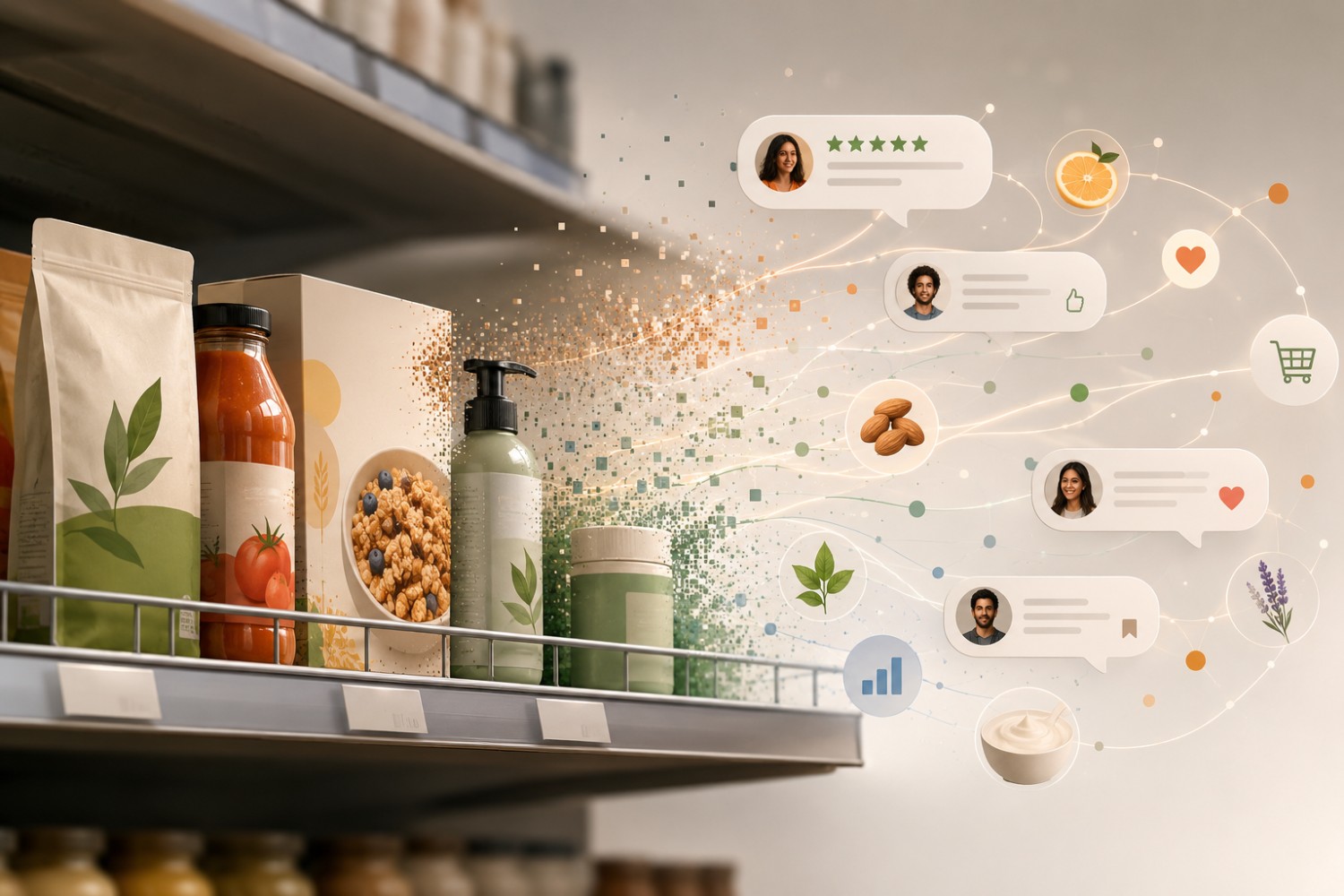
A flavor or ingredient trend used to take months to move from niche interest to mainstream shelf presence. In 2026, it can happen in weeks. Cloud bread, pancake cereal, and pasta chips did not stay confined to social feeds; they became commercial products, with brands rolling out formats like high-protein mug cake mixes directly mirroring viral recipes. Japanese strawberries alone generated 28.14% year-over-year growth and more than 23 million social posts, translating into over 5.3 million recipes.
For CPG innovation teams, the challenge is no longer spotting a trend. It is spotting it early enough to act.
The Trend Lifecycle: Why Timing Is Everything
Viral food and flavor trends tend to follow a predictable pattern, and understanding it is the first step to acting on it early:
- Viral ignition (weeks 1-2): Individual creators post, engagement builds, and the product is barely available through mainstream channels
- Mainstream crossover (weeks 3-6): Traditional media picks up the story, search volume climbs, and early adopter brands move to secure supply or launch fast-follow products
- Category adoption: The trend shows up in syndicated sales data, retailer assortments shift, and the opportunity for differentiation narrows sharply
Brands that identify a trend during ignition can shape the category. Brands that wait for it to show up in a Circana or NielsenIQ extract are often reacting to a story competitors have already told.
Why Traditional Research Methods Fall Short
Surveys and focus groups capture stated preference, not emerging behavior. Syndicated data confirms what is already selling. Neither is built to catch a trend before it has a name.
- Consumer research cycles typically run on a scale of months, not days
- Syndicated data reflects transactions that have already occurred, by definition lagging the conversation that created demand
- CPG products generate enormous organic mention volume in places brand teams do not control or always see: pantry organization videos, "what I eat in a day" content, unboxing hauls, much of it without a direct brand tag
This is the specific gap AI-driven social listening is built to close.
Where AI Actually Adds Value
Modern AI social listening goes well beyond tracking mention counts. A few capabilities matter most for CPG trend detection specifically:
- Natural language processing at scale: parsing millions of posts, captions, and comments across platforms to detect flavor and ingredient references a manual review would miss entirely
- Emotion and intent detection: distinguishing genuine, durable enthusiasm from one-off novelty reactions, rather than treating all positive sentiment as equally meaningful
- Cross-platform signal correlation: a flavor trending in short-form video content, paired with rising search interest and early appearances in indie or DTC brands, is a materially stronger signal than any single data point alone
- Anomaly and velocity detection: flagging unusual spikes in conversation volume in near real time, rather than depending on an analyst to notice a shift manually
These capabilities have matured considerably. Sentiment classification that once took a human coder days now runs in seconds, and anomaly detection can flag a volume spike before anyone opens a dashboard to look for it.
An Important Caveat: Social Listening Alone Is Not Enough
AI has made social listening faster. It has not made it broader. A listening tool, however sophisticated, is still reading public conversation. It cannot see what is happening at the shelf, in loyalty data, or in repeat purchase behavior.
The most reliable trend signals for CPG decision-making come from combining sources, not relying on any single one:
- Social conversation for early, high-velocity signal
- Search trend data as a corroborating layer
- Syndicated retail data (Circana, NielsenIQ) for category-level validation
- Internal POS and loyalty data to assess fit with existing brand equity
A brand manager flagging a TikTok trend to a category lead is an anecdote. The same signal, cross-checked against search momentum and early retail movement, is evidence a portfolio decision can be built on.
From Signal to Shelf: Making It Actionable
Detecting a trend is only useful if it feeds a process. A functioning early-detection capability typically does three things well:
- Filters volume into a shortlist: screening hundreds of micro-trends down to the handful worth prototyping, rather than reacting to every spike
- Feeds NPD directly: connecting flavor and ingredient signals to concept testing timelines so the gap between detection and product close faster
- Extends beyond flavor: tracking not just ingredients but adjacent signals, including packaging language, claims, and positioning already emerging around a trend, so launches land with the right story attached, not just the right product
Fiber offers a useful illustration of this pattern already playing out. According to IFIC's 2025 Food & Health Survey, 64% of Americans are now intentionally trying to consume more fiber, yet fewer than 10% of women and just 3% of men actually meet fiber recommendations. That gap between stated intent and behavior is precisely the kind of signal that, tracked early and combined with the right data, translates into a defensible innovation pipeline rather than a reactive one.
The Shift From Reactive to Ready
The brands that consistently win the trend cycle are not the ones with the biggest listening budgets. They are the ones that have built a repeatable process connecting social signal to category data to product decisions, and that treat trend detection as an ongoing capability rather than a one-time research exercise.
As the pace of consumer culture continues to outrun traditional research timelines, that kind of always-on, data-integrated approach is becoming less of a competitive edge and more of a baseline requirement for staying relevant on the shelf.